
November 7–28, 2025 | Philippines, Indonesia, Malaysia, Thailand
Since its inception, the APEC–Canada Growing Business Partnership (ACGBP) project has received strong support and recognition from its donor, Global Affairs Canada (GAC). From November 7–28, Mr. Eric Berard, Team Lead of the Southeast Asian Regional Program at Global Affairs Canada, conducted a Monitoring & Evaluation mission on the implementation of GAC projects in Southeast Asia, including the ACGBP project. The ACGBP Program Manager, Xiaoyi (Yee) Ze, joined the portion of the mission that overlapped with the ACGBP focus economies. The joint mission provided opportunities to meet with local implementation partners, government counterparts, and Canadian overseas missions, as well as to participate in several project events. It was a successful trip, with the following key reflections and highlights.
Quality Delivery along Implementation
Throughout the mission, the team visited and met with seven local implementation partners, including the Philippine APEC Study Center Network, National Association of Women Entrepreneurs of Malaysia (NAWEM), Women of Will, Institute for Economic and Social Research at the University of Indonesia, Association for Women in Small Micro Business Assistance in Indonesia, Kenan Foundation Asia, and Kai Analytics. While the capacity-building stream of the project is concluding, the team had the opportunity to attend two mentorship closing events in Malaysia and Thailand. The capacity-building stream of the project is designed with three interlinked components: a business management workshop series, mentorship programs, and research studies. Typically, mentorship participants are selected from the workshop cohort, and the research studies connect closely with workshop topics.
On November 20, NAWEM held its graduation ceremony for the mentorship program. Dr. Azman Bin Abdullah, Deputy Undersecretary & Head of International Relations Section from the Ministry of Entrepreneurship and Cooperatives Development, and representatives from SME Corp. attended the event. During the ceremony, mentees shared their stories of change, explaining that their businesses had become much more structured after participating in the mentorship program. They highlighted the valuable lessons learned on social enterprise development, data collection, network expansion, and effectively running a community-focused business — many describing these insights as “Aha moments.” They also spoke about the emotional challenges they faced in their entrepreneurial journeys and how the mentorship program supported them through these transformative business and life changes.


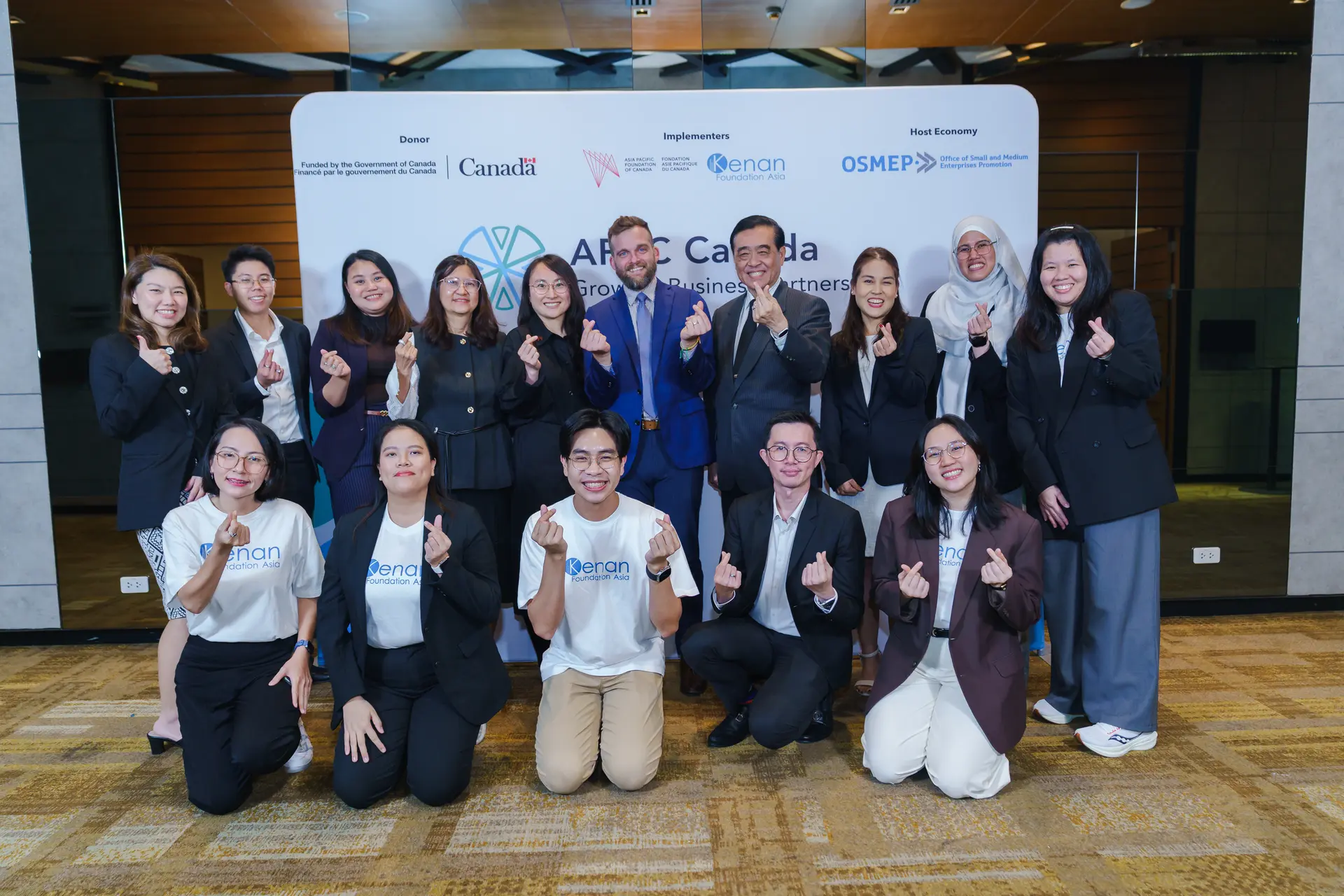
Kenan Foundation Asia hosted a Business Pitching and Mentorship Closing Ceremony on November 27, which was attended by 80–100 participants, including local MSMEs, government representatives, and supporting organizations. The event featured 18 booths showcasing Thai businesses across sectors such as food, manufacturing, training, and crafts. Featured businesses included environmentally friendly catering services; handbags and clothing made from recycled materials; education programs for children with disabilities; and community-based handmade enterprises.
The event also included a business pitching session, where 10 Thai MSMEs presented their business ideas to compete for various awards. Pitching skills were a key component of the mentorship program, and this session offered MSMEs the chance to apply what they had learned. Judges for the pitching competition included Assistant Director General, Mr. Wittawat Lamsam from the Office of Small and Medium Enterprises Promotion (OSMEP), Dr. Wimonkan Kosumas, Executive Director of Kenan Foundation Asia, and a representative from SME Bank. From the pitching competition, a women-led business developing an app for kidney disease patients won first place, while other participating businesses received varying levels of grant support.
Both OSMEP and Kenan Foundation Asia expressed appreciation for Canada’s support for Thai MSMEs. Dr. Wimonkan highlighted that women-owned MSMEs account for nearly 70 per cent of all MSMEs in Thailand, balancing both business responsibilities and family obligations. She emphasized the importance of supporting these entrepreneurs and the significant impact of this project.


Strong Support from Canadian Embassies and High Commissions
As a Canadian-funded project supporting MSMEs, ACGBP has received strong and sustained support from Canadian missions since the inception of Phase I in 2016. During this mission:
- Malaysia: The project team visited the High Commission of Canada in Kuala Lumpur, where local partners presented project deliverables and outcomes directly to the Mission. The visit generated strong interest, and the High Commissioner, Her Excellency Jodi Robinson, attended the Women of Will mentorship graduation ceremony on December 16.
- Thailand: On November 21, the project team, together with local partner Kenan Foundation Asia, visited the Embassy of Canada to Thailand and provided updates on local project implementation. Subsequently, Counsellors Frank Le and Cathy Hardman attended Kenan Foundation Asia’s business showcase on November 27, demonstrating a strong interest in Thai MSMEs. Counsellor Le also offered to facilitate connections with Canadian and local business communities.
- Indonesia: The Program Manager engaged with three Embassy staff to introduce the project and explore collaboration opportunities. First Secretary (Development) Sue Wiebe participated actively in discussions with the Ministry of MSMEs and provided valuable guidance on preparations for an upcoming ACGBP event in Jakarta alongside the ABAC I meeting.
To date, ACGBP has benefited from strong support across all five participating economies — Indonesia, the Philippines, Viet Nam, Malaysia, and Thailand — reinforcing Canada’s visibility and engagement in the region.


Women Positive Engagement From Local Government Counterparts ’ strategies for MSME longevity
To conduct a successful project in the five host economies, local government support is crucial. During this mission, the GAC Team Lead for the Southeast Asia Program and the Program Manager of ACGBP project also paid visits to local government counterparts across the four visited economies: The Bureau of SME Development, Department of Trade and Industry in the Philippines, the Ministry of MSMEs in Indonesia, the Ministry of Entrepreneur and Cooperative Development of Malaysia, and the Office of Small and Medium Enterprises Promotion of Thailand. Local government counterparts all gave positive feedback and expressed interest in future collaboration.


Value of APEC Networks and Canada’s Leadership in the SMEWG
The ACGBP project’s strong government relationships are further reinforced through APEC networks. As a Phase II initiative, both APF Canada and the ACGBP are well recognized within the APEC MSME community. Canada’s ongoing leadership in the APEC SME Working Group — having served as Chair for the past two years and now as Vice-Chair — has enhanced Canada’s visibility and influence in the region. In the final year of the project, APF Canada will leverage its cumulative experience, extensive networks, and strong institutional reputation developed over nine years of managing MSME initiatives to successfully conclude this regional project.